Karo Sambhav collaborates with leading organisations to jointly develop industry frameworks, standards, governance mechanisms, systems and processes that advance the transition to circular economy. know more about our alliances.

Close x

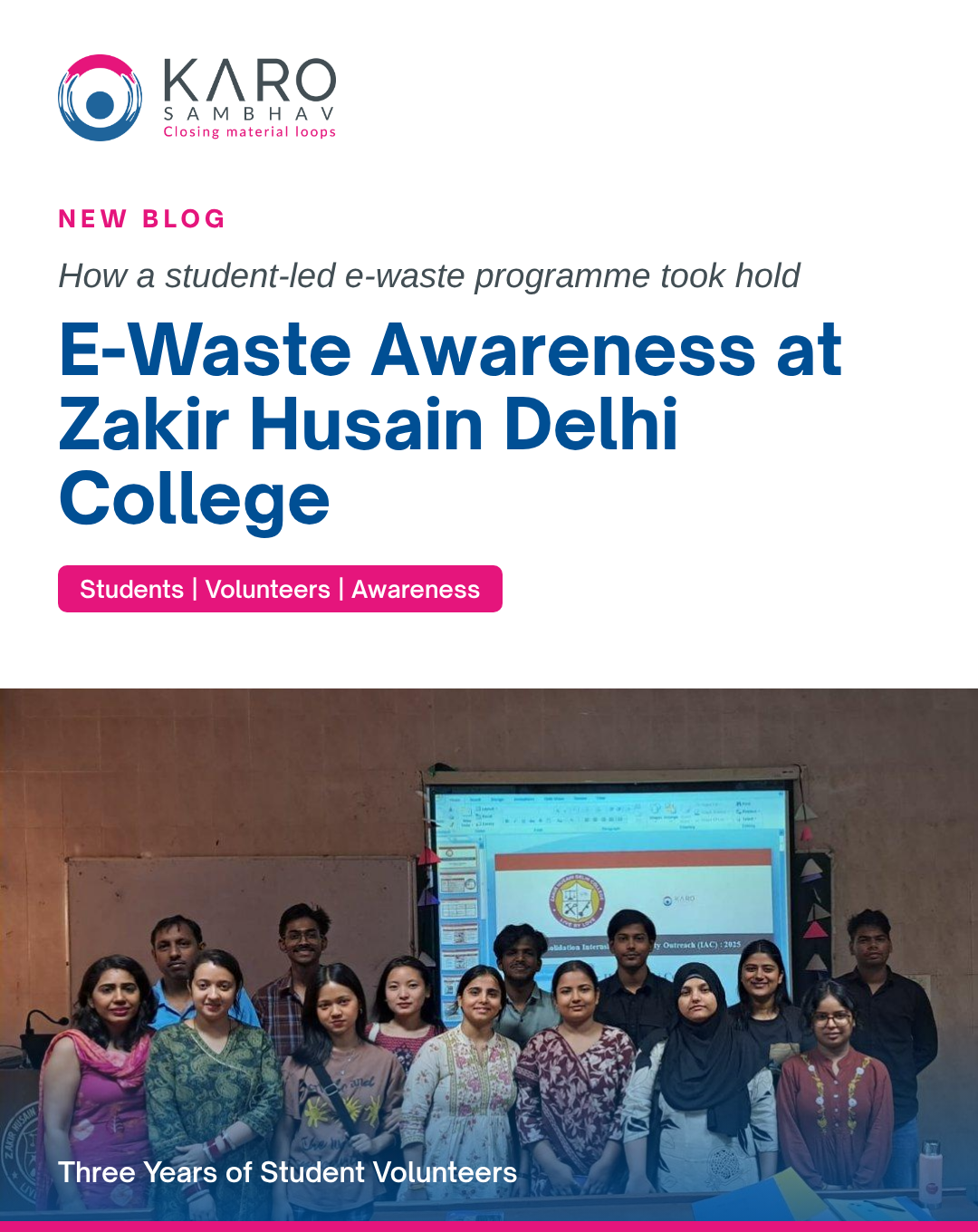
For the past few years, Karo Sambhav has been working with Zakir Husain Delhi College (ZHDC), University of Delhi, to awaken a wider awareness of e-waste within and beyond the campus. This is the story of how a student-led e-waste programme took root there, and why it continues to grow.
The work began with the college leadership, whose belief in the idea opened the first door. Karo Sambhav engaged the leadership and teachers before taking sessions to students, which laid the ground for students to step forward. On the student side, the Environment Society (Aranya), the students’ own platform for environmental awareness, became the bridge between the sessions and the students, keeping the momentum alive.
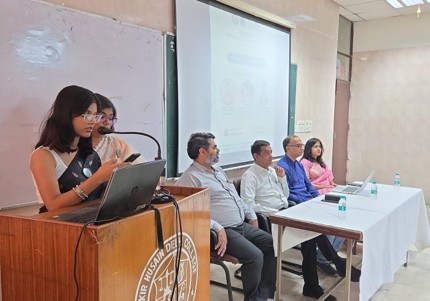
Karo Sambhav’s sessions on campus walk students through what counts as e-waste, how formal and informal recycling differ, and what the circular economy means in practice, with room for questions and practical advice on what to do with old devices. Footage from Seelampur, where informal e-waste collection takes place, offers students a window into a device’s life after it is discarded.
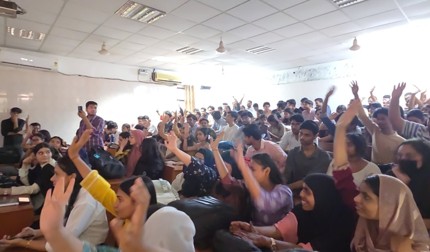
Soon students were bringing in earbuds, headphones, wires, phones and laptops, with e-bins near departments making it easy to let go of a device responsibly. The Environment Society held larger items for safe storage and added a spark of friendly rivalry through an inter-department e-waste collection competition.
Since 2024, a volunteering programme has run twice a year, each cycle lasting two to three months. More than 80 students have joined in, lending their time and energy. Volunteers took on awareness, communication, interviews and documentation, and for some, speaking before a room of peers was a first step towards finding their voice. Repetition is what makes it last: a one-off session may spark interest, but it is continued interaction that builds familiarity and trust, and each new cycle brings in fresh batches as earlier volunteers graduate.
In 2025 and 2026, activities were additionally carried out under CP4Plastic (Circular Pathways for High-Value Plastics from Electronic Waste in India), with GIZ India as a partner. Student volunteers recorded videos and interviews, capturing the voices of peers across the campus, and GIZ representatives joined a conversation on e-waste management hosted by The Environment Society on 1 April 2026.
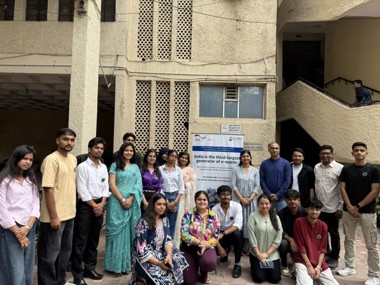
ZHDC’s experience offers a simple roadmap: four things that turn good intentions into lasting action. The first is support from the college leadership and a student body to carry the work: faculty support opened the way, and The Environment Society kept students involved. The second is a session that makes e-waste real, as the Seelampur footage did turning an abstract issue into something students could see. The third is a visible place to hand over devices, since e-bins near departments gave students a simple way to act. The fourth is a volunteer cycle that renews itself, so that new batches carry the torch as others graduate and the programme outlives any single group of students.
Karo Sambhav collaborates with leading organisations to jointly develop industry frameworks, standards, governance mechanisms, systems and processes that advance the transition to circular economy. know more about our alliances.