Karo Sambhav collaborates with leading organisations to jointly develop industry frameworks, standards, governance mechanisms, systems and processes that advance the transition to circular economy. know more about our alliances.

Close x

At Karo Sambhav’s International E-Waste Day webinar, Pascal Leroy, Director General of WEEE Forum, described it as one of the main messages from WEEE Forum’s recent conference in Dublin.
The all actors approach starts from a simple idea: when a problem is societal, no single group can solve it alone. Extended producer responsibility (EPR) is structured around producers, who are responsible for financing the collection and treatment of the products they put on the market. But financing the system does not put every step in their hands. Whether end-of-life products actually reach a recycler also depends on others in the system, such as retailers, local bodies, consumers and regulators. That is why everyone in a position to contribute needs to be at the table, across the whole ecosystem and the whole value chain. In Pascal’s words:
“Producers on their own cannot solve this problem. When you have to solve a societal problem, you need all the people who are in a position to contribute sitting around the table: the whole ecosystem, the whole value chain. Producers remain financially responsible for the end of life of the products, but that does not mean they can solve the problem alone.”
Pascal Leroy, Director General, WEEE Forum

Pascal’s message builds on something WEEE Forum had mentioned earlier in their 2020 vision paper, An enhanced definition of EPR and the role of all actors. The paper mentions that “extended” producer responsibility, does not mean “exclusive” producer responsibility. It argued that all actors that can influence collection rates should hold responsibility in line with their actual competences and access to e-waste, and that all actors need to have legal obligations which competent authorities must enforce.
The paper named who those actors are. National authorities can provide the legislative framework and run awareness campaigns, whereas enforcement bodies, including customs, carry out targeted inspections. Retailers provide take-back of old products and municipalities communicate with citizens and provide collection infrastructure. Recyclers operate to treatment standards and report what they handle and households shape collection through how they dispose of products.
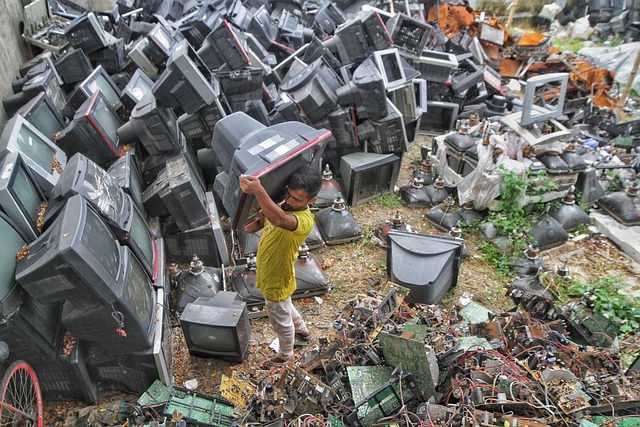
WEEE Forum’s international conference in Dublin, From Challenge to Change: Extended Producer Responsibility in a New Policy Era, was held on 17 and 18 September 2026. Co-hosted with WEEE Ireland, it brought together over 200 producer responsibility organisations, policymakers, industry leaders and civil society representatives to discuss the future of EPR in Europe, including the upcoming Circular Economy Act. The all actors principle was at the centre of the discussion.
At the webinar, Pascal pointed to two gaps in the European system. Enforcement remains too limited, and retailers need to step up their role, including making it possible to return an end-of-life product at no cost.
Pranshu Singhal, Founder of Karo Sambhav, made three observations on India. Retail is where most consumers meet the system, and bringing retailers in more actively could make it much easier to build the collection points India needs. The number of producers is so large, especially for long-tail items such as fast tech, that enforcement alone may not be enough, and other forms of deterrence are worth testing. And with quick commerce, consumers are beginning to expect pickup of an old product at the same speed at which a new one arrives. That points to a role for innovation and technology in raising collection numbers. Soumya Chaturvedula of ICLEI South Asia added a municipal view on the same gap on the webinar.
The all actors principle does not shift responsibility away from producers. It asks who else needs to be at the table, and what each should be accountable for.
Karo Sambhav collaborates with leading organisations to jointly develop industry frameworks, standards, governance mechanisms, systems and processes that advance the transition to circular economy. know more about our alliances.